
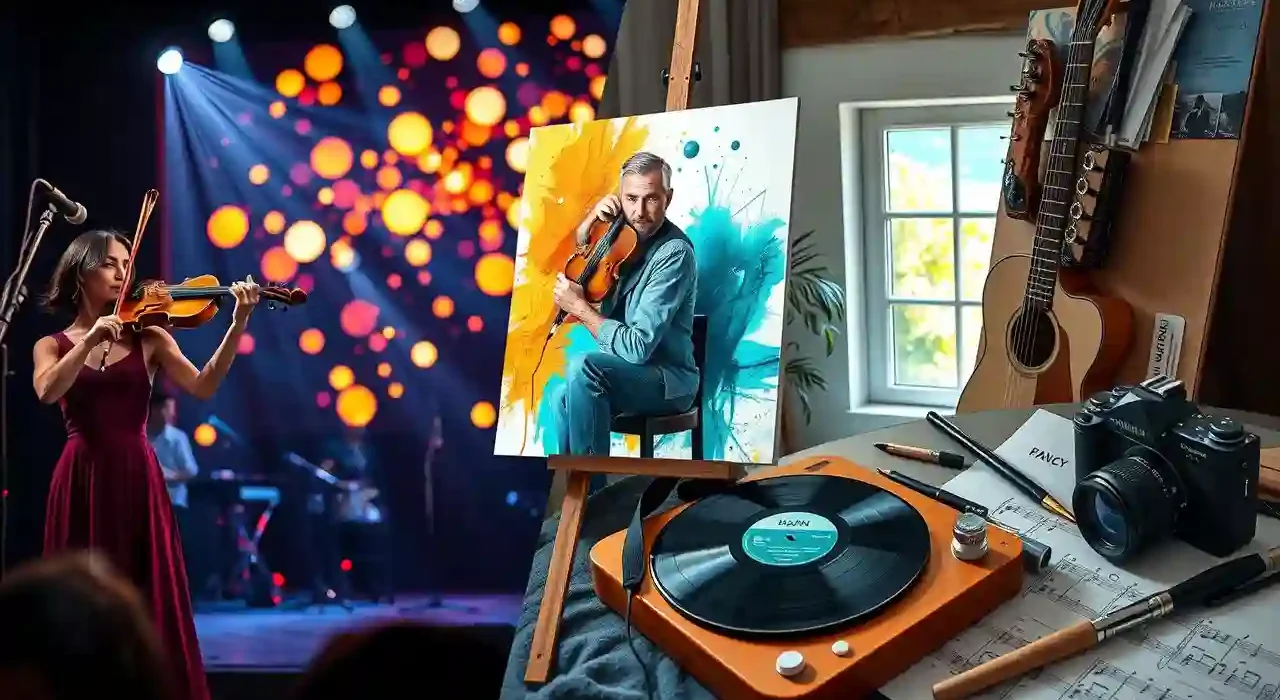
The intersection of music and visual arts has long been a vibrant arena where two powerful modes of expression come together to inspire and enrich one another. This blog delves into the historical and contemporary influences that shape this relationship, highlighting seven key insights into how music and visual arts motivate each other to evolve and captivate audiences.
Historical Context
The history of the connection between music and visual arts can be traced centuries. In the ancient civilizations, music served as an accompaniment to visual arts including architecture and sculpture. As an example, in Ancient Greece, music was used to accompany theatrical performances, which made the visual narrative storytelling more emotional. The great Greek thinker Plato was of the opinion that the arts of music and the visuals were interwoven as he held the view that both could bring about goodness and harmony in the society.
The connection between sound and visual perception was examined by artists in the Renaissance such as Leonardo da Vinci. The research of Da Vinci regarding light and shadow in painting was similar to the use of harmony and rhythm in music and demonstrated a holistic approach to the creative process. This time became the foundation of further cooperation between artists and music.
The Effect of Music on Visual Arts
Music has been used extensively in the development of visual art and the artist has been inspired by the music in most cases. The visual creators may be touched by the emotional and narrative nature of music, and this will make them consider new themes and techniques.
1. Color and Emotion
The emotional aspect of music has been a source of inspiration by many artists. Visual arts can be characterized by the use of color as an indicator of the mood and tone of music. As an example, the founder of abstract art Wassily Kandinsky thought that colors were capable of producing certain musical notes and feelings. His works tend to reflect the rhythmic and harmonic attributes of music which brings about a synesthetic effect to the audiences.
2. Movement and Rhythm
Music has the ability to produce rhythm in visual art. Such painters as Jackson Pollock and Claude Monet have utilized the notion of rhythm in their painting styles. The drip paintings of Pollock such as the ones include jazz music as they are spontaneous and energetic, and focus on the movement and fluidity. Equally the Impressionist paintings of Monet can be said to capture the ephemeral qualities of light and air, just like the ephemeral qualities of music tunes.
3. Narrative and Storytelling
Music does narrate and visual artists often make use of the narrative aspect to enrich their work. Examples that are based on the songs or musical themes may form a conversation between the two. To illustrate it, album covers of some famous musicians such as The Beatles and David Bowie tend to be displayed in visually spectacular artistic works that reflect the themes of their music. These partnerships assist in the enhancing of comprehension and appreciation of the two arts by the audience.
The Effect of Visual Arts on Music
On the other hand, visual art also has had a massive influence on the music industry, and how musicians express themselves and their art is perceived.
1. Album Artwork and Branding
Album artwork is a very important part of the brand of an artist in the music industry. Musicians work with visual artists to come up with spectacular images that capture the nature of their music. The covers of famous albums, including Pink Floyd’s The Dark Side of the Moon and Nirvana’s Nevermind, have become cultural symbols, which add additional identity and the attractiveness of the music.
2. Music Videos
With the emergence of music videos in the 1980s, there was a big overlapping of music and visual arts. Film directors and visual artists started to make short films to accompany music, which could have new techniques and methods of narration. The music videos provide the ability to express art, not only through the audio format but also through the combination of visual and audio to have a distinctive experience of senses. Bjork and Childish Gambino are some of the artists that have taken music videos to the next level, incorporating visual art in expressing more intricate ideas and stories.
3. Live Concerts and Visual arts
Live performances of music are usually accompanied by visual effects e.g. stage design, lights and projections. Such artists as Bjork or Kanye West are famous for their performances which are music combined with visual art which is incredibly impressive. The productions are immersive and involve the audience across the various levels of senses and make the music more emotional.
Collaborative Projects
The point of convergence between music and visual arts has resulted in a number of collaborative projects, which demonstrate the interaction between the two modes. Such exhibitions as Art Basel and Coachella include visual artists together with musicians and provide a multidisciplinary experience to visitors. Also, such projects as “The Artist Project” that matches musicians with visual artists contribute to collaboration and innovations.
The Future of the Intersection
With the ever changing technology, the cross roads between music and visual arts are bound to improve even more. Virtual reality (VR) and augmented reality (AR) are also becoming new mediums of artistic expression, and artists are able to make immersive experiences that are integrated with sound and images. Those technologies provide new opportunities of collaboration, artists are able to break boundaries and find new creative horizons.
Conclusion
The crossbreed between music and visual arts is an enriching and vibrant arena that brings about invention and creativity. In all history these two forms have interacted with each other, improving the experience and perception of art. The future of music and visual art will only get better as these two continue to inform our cultures, providing new platforms to explore and articulate.
Frequently Asked Questions (FAQs)
1. What is the effect of music and visual arts on one another?
Visual arts are affected by music in terms of expression of emotions, colour schemes and storytelling. In the same way, visual arts have an influence on music through album covers, music videos, and live performance, which forms a dynamic relationship between the two.
2. How does color affect the correlation between music and visual arts?
Color is an important element in the expression of emotions in music and visual art. Color schemes applied by artists are often related to the mood of a musical piece of work, which produces a synesthetic experience to both viewers and listeners.
3. What has technology and the new media done to the convergence of music and the visual arts?
The intersection has been enlarged by technology in terms of music videos, digital art, and immersive experiences with VR and AR. These innovations make it possible to develop creative partnerships and innovative interactions with music and visual arts among the audience members.